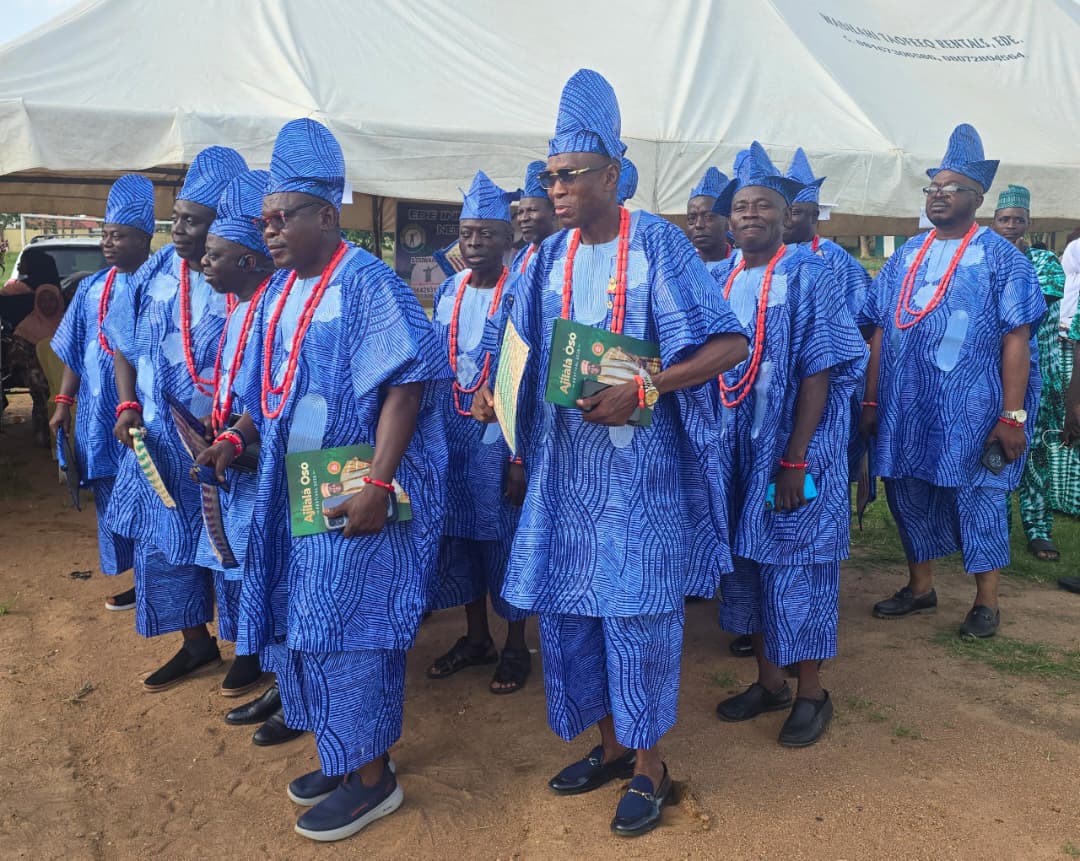
…How Ajilalaoso Turned Hardship into a Hymn of Heritage
In a season when economic storms threatened to silence celebration, the ancient town of Ede, Osun State, answered with drums, colour, and an unbreakable communal will.
There is a particular kind of courage that does not carry a weapon. It wears hand-woven fabric. It arrives at dawn. It moves in procession, shoulder to shoulder with twenty other groups, each one a living archive of a people who have decided, consciously, defiantly, that no economic misfortune will be permitted to bury what centuries built.
That courage had a name on the third day of the Eid-el-Kabir celebration this year.
It was called AjilalaOso.
And it was magnificent.
THE GROUND THAT REMEMBERED
The NYSC Permanent Orientation Camp in Ede is not, on most mornings, a place associated with spectacle.
But long before the harmattan dust of a typical morning could settle, the camp was already becoming something else entirely, a canvas splashed with the living colours of Yoruba identity, a stage wide enough to hold a town’s entire soul.
Men and women, elders and youths, children still learning to steady themselves on young feet, they came.
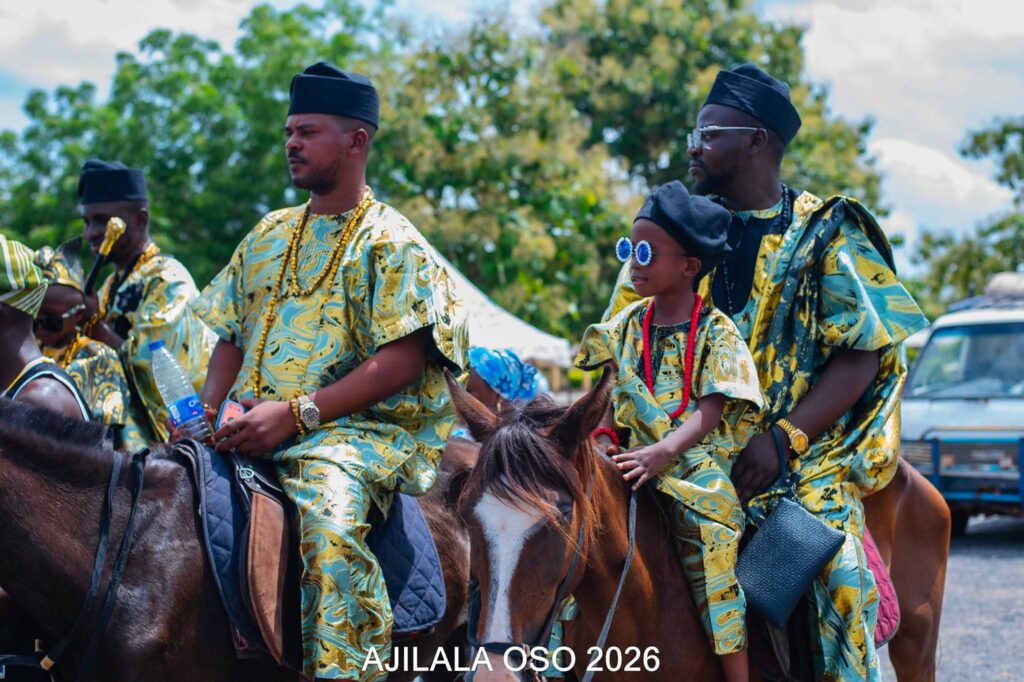
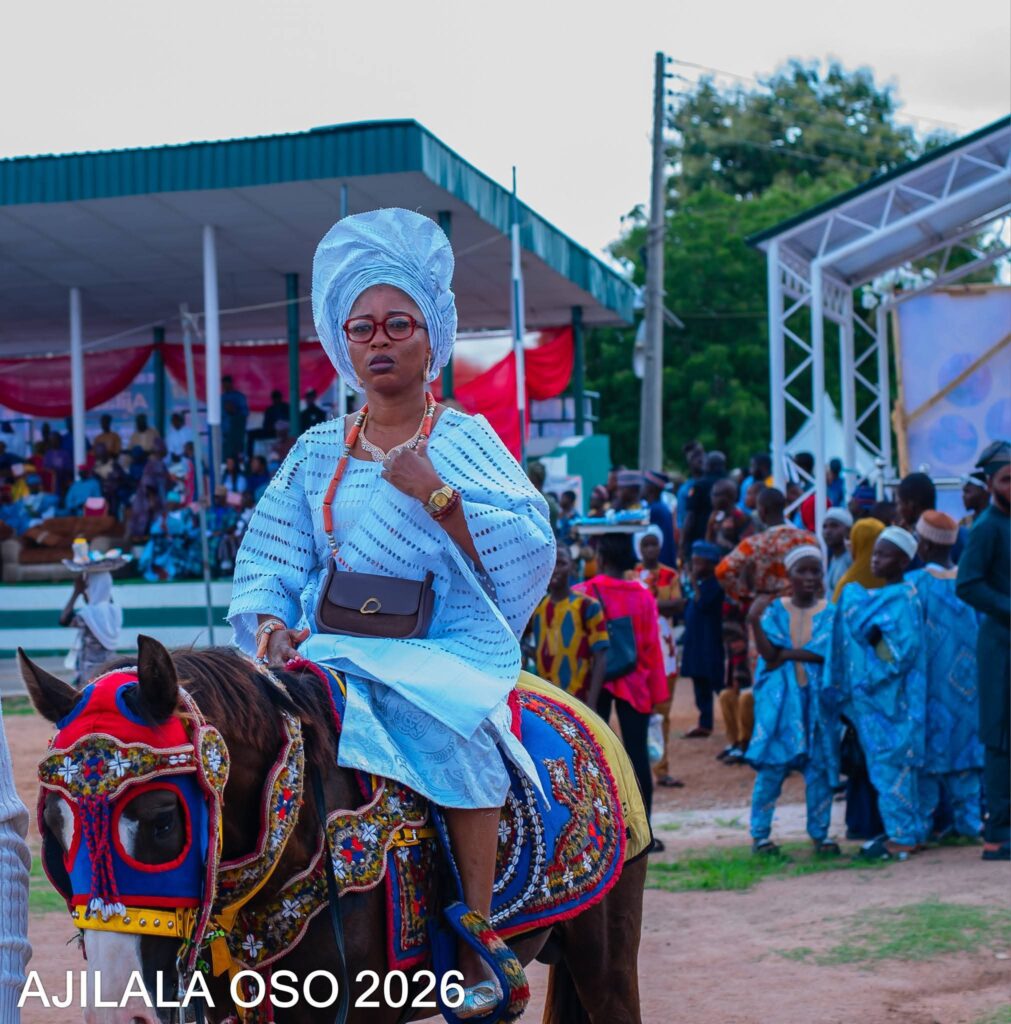
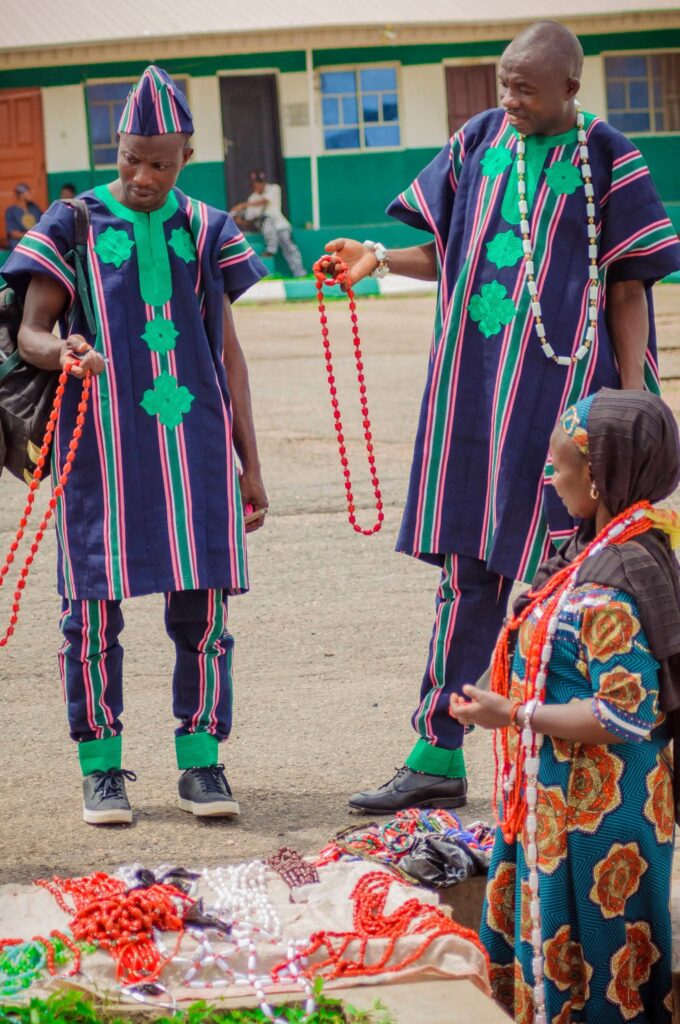
From neighbourhoods within Ede, from cities across Nigeria, and from points in the diaspora where the memory of home is kept warm like a pot that never leaves the fire, they came.
They came because AjilalaOso called.
And in Ede, that call carries the weight of generations.
The festival, which has over the years grown from a modest local cultural gathering into one of South-West Nigeria’s most anticipated annual celebrations, marked another milestone in 2026.
However, this edition carried a dimension that previous ones did not loudly declare: it was a conscious act of resistance against despair.
MANY GROUPS, ONE VOICE
If there was a single image that crystallised the spirit of AjilalaOso 2026, it was the procession.
More than twenty social clubs, cultural groups, community associations, and age-grade organisations filed into the festival grounds in distinct uniforms and carefully composed attires, each group a statement, each formation a paragraph in a story that Ede has been writing about itself for as long as anyone can remember.
Coordinated appearances gave way to cultural dances.
Songs rose and fell in waves. Traditional performances unfolded with the precision of people who understand that what they are doing is not merely entertainment, but a testimony.
It is proof of continuity. The procession was not simply colourful. It was coherent. It communicated, without a single spoken word, that the people of Ede know who they are and that they intend to remain exactly that, regardless of whatever the broader economy decides to do.
Community leaders and stakeholders present at the event were unambiguous in their commendation.
The dedication of the participating groups, they noted, speaks directly to the festival’s deeper function: fostering peace, sustaining social cohesion, and anchoring a sense of belonging for indigenes both resident and scattered across the country and beyond.
THE POLITICS OF THE PLATE
Food, in Yoruba cultural philosophy, is never merely sustenance. It is memory. It is negotiation between past and present. It is the most democratic form of cultural transmission, because everyone eats, and therefore everyone learns.
The array of local delicacies on display at AjilalaOso 2026 said this plainly and without apology.
Visitors who may have arrived as observers left as participants, initiated into the culinary language of a town that understands its kitchen as an extension of its identity.
Beyond the pleasure of taste, the food exhibition functioned exactly as the best cultural institutions do: it introduced, it contextualised, and it preserved.
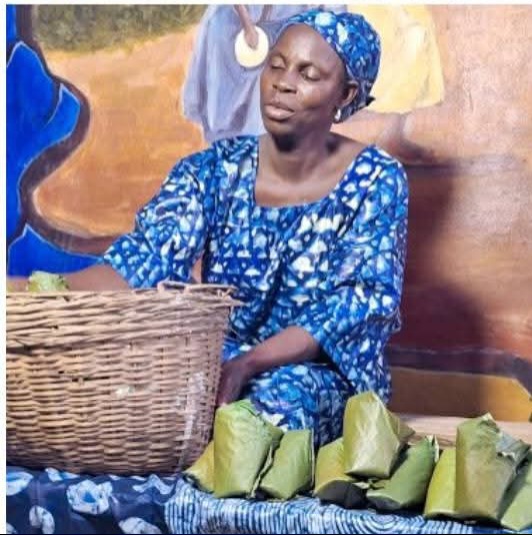
Younger attendees, many of whom engage with food primarily through the language of fast commerce, encountered dishes whose names carry histories, whose preparation methods carry rituals, whose very ingredients speak of a landscape and a way of life.
This is the quiet genius of AjilalaOso. It does not lecture. It feeds.
THE ECONOMY TRIED. EDE REFUSED.
It would be dishonest to write about AjilalaOso 2026 without naming what it was up against.
Nigeria’s economic realities in 2026 have not been gentle. Rising costs, constrained household incomes, and the general fatigue that accompanies prolonged financial pressure have forced many communities to scale down, postpone, or quietly abandon social and cultural events.
The calculus of survival often leaves little room for celebration. Ede made a different calculation. The turnout at this year’s festival was not incidental. It was intentional. The people of Ede chose, in the face of demonstrable hardship, to show up in numbers, in costume, in voice, in appetite.
That choice is itself a form of cultural statement, one that resists the narrative that communities in difficult times must retreat into themselves and wait for better days before they can be fully human again.
AjilalaOso 2026 argued, with persuasive force, that cultural vitality is not a luxury to be deferred. It is, in fact, one of the mechanisms by which communities survive difficulty, by reminding themselves of who they are, what they carry, and why it matters.
WHERE REUNION WEARS TRADITIONAL COLOURS
Festivals serve functions that formal institutions rarely can. AjilalaOso, beyond its spectacular cultural displays, operated this year as something ancient communities have always needed and often built: a reunion.
Old friendships renewed themselves in the crowd. Family ties, strained by distance and the ordinary erosions of busy lives, found repair in the shared language of a familiar song, a recognisable dish, a procession that your grandfather also once watched.
New relationships were struck with the easy confidence that comes from knowing you already share something fundamental with the stranger beside you.
The atmosphere that sustained the event from its vibrant opening to its gradual, reluctant close was not manufactured. It was cultivated by generations of commitment to a tradition that has always understood community as something requiring active maintenance, not passive inheritance.
WHAT EDE SAYS TO THE WORLD
There is a growing conversation across Africa about what cultural festivals genuinely mean in the twenty-first century, whether they are relevant, whether they are sustainable, whether they serve modern communities or merely perform nostalgia for them.
AjilalaOso 2026 answered that conversation with the most persuasive argument available: evidence.
Ede is a town that values its heritage and acts on that valuation. It does not wait for outside validation, external funding, or ideal conditions.
It gathers its people, coordinates its groups, presents its food, performs its dances, and makes the argument through doing.
In the process, it projects something that no government tourism campaign can manufacture: an authentic image of a community in genuine, joyful relationship with itself.
That image, carried home by visitors and back across borders by the diaspora, is worth more than any advertisement.
It says: Ede is alive. Ede remembers. Ede endures.
THE MUSIC FADES. THE MESSAGE REMAINS.
As the final performances drew down and the festival grounds gradually returned to their ordinary dimensions, one could observe in the departing crowd something that economists do not typically measure but communities depend on entirely: morale.
The people of Ede left AjilalaOso 2026 carrying something they had arrived to find or to reaffirm.
Call it pride. Call it solidarity. Call it the specific confidence of people who know their own story and have just retold it, together, in full colour.
AjilalaOso 2026 was, in the end, exactly what its most faithful defenders have always known it to be: not a festival about the past, but a festival that builds the future, one procession, one dish, one collective memory at a time.
Ede has spoken.
Those who were not there should make plans to listen next year.
Wtitten by Otunba Babatunde Tiamiyu, a media executive, community pride, and one of the illustrious sons of Ede
