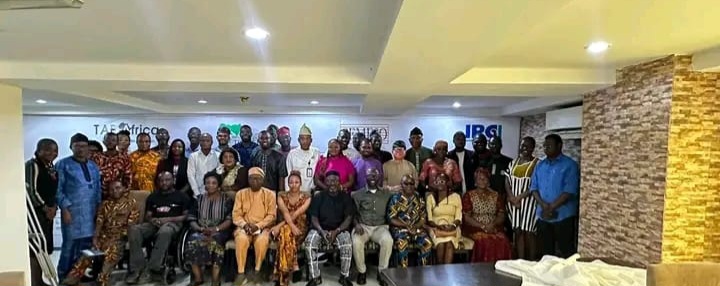
The need for Media Executives, editors and newsroom supervisors in Osun State to adopt more inclusive reporting practices by increasing coverage of issues affecting Persons with Disabilities (PWDs), has been emphasised.
The appeal was made during a stakeholders’ reflection meeting on inclusive media reporting held in Osogbo ahead of the August 15th Governorship Election in Osun State.
The meeting was put together by the Centre for Media and Society (CEMESO) in collaboration with the International Press Centre (IPC), TAF Africa and the Nigerian Women Trust Fund (NWTF).
The programme brought together media executives, regulatory bodies and representatives of disability advocacy groups, to discuss strategies for improved visibility and participation of Persons with Disabilities in the democratic process, especially the Osun state Governorsh election.
Presentating his paper titled “Understanding PWD Inclusive Reporting as a Platform for Promoting the Image and Issues Enhancing the Voices of Persons with Disabilities,” Executive Director, International Press Centre, IPC, Lanre Arogundade, charged the media to ensure that no section of society is excluded from governance and electoral conversations.
According to him, the European Union Support to Democratic Governance (EU-SDGN) programme seeks to strengthen democratic institutions by promoting citizen participation, equal access to information and inclusive governance.
Arogundade noted that democracy can only flourish when every citizen, irrespective of disability, gender or social status, has the opportunity to participate fully in public affairs.
He urged journalists to make their platforms available for Persons with Disabilities to express their views, engage political leaders and contribute to discussions surrounding the coming governorship election.
On his part, the Executive Director of the Centre for Media and Society, Dr. Akin Akingbulu, stressed that Persons with Disabilities enjoy the same constitutional rights as other members of the society and should not be discriminate against in accessing information or participating in civic activities.
He called on media organisations to embrace disability-friendly practices such as use of sign language interpretation on news and programmes,easy access to communication materials, and facilities relative to their needs.
Akingbulu further advised media managers to come up editorial policies that promote inclusive reporting and eliminate obstacles that hinder access to information for vulnerable groups.
Project Manager of the Nigerian Women Trust Fund, Malliya Manu, said the objective of the meeting was to encourage balanced political reporting that gives greater attention to women and Persons with Disabilities, who are often underrepresented in election coverage.
She explained that inclusive journalism would deepen democratic participation and ensure that the concerns of marginalised communities receive adequate media attention.
In their separate remarks, Project Manager of CEMESO,Timothy Bamidele and Sanmi Falobi of the International Press Centre, urged journalists to sustain issue-based reportage on women, youths, Persons with Disabilities and other vulnerable groups before, during and after the governorship election.
At the end of the meeting, the participants, including the General Manager, Ayekooto FM, Iwo, Otunba Babatunde Tiamiyu, agreed that inclusive media coverage remains essential to promoting credible elections, strengthening democratic governance and ensured every segment of society have their say in Nigeria’s democratic process.
