The Vice Chancellor of Augustine University Ilara-Epe has called for a strong call for institutional self-reliance, particularly in energy generation, he said as part of a broader reflection on Nigeria’s development journey, communication ethics, and the role of young people in nation-building must be germain.
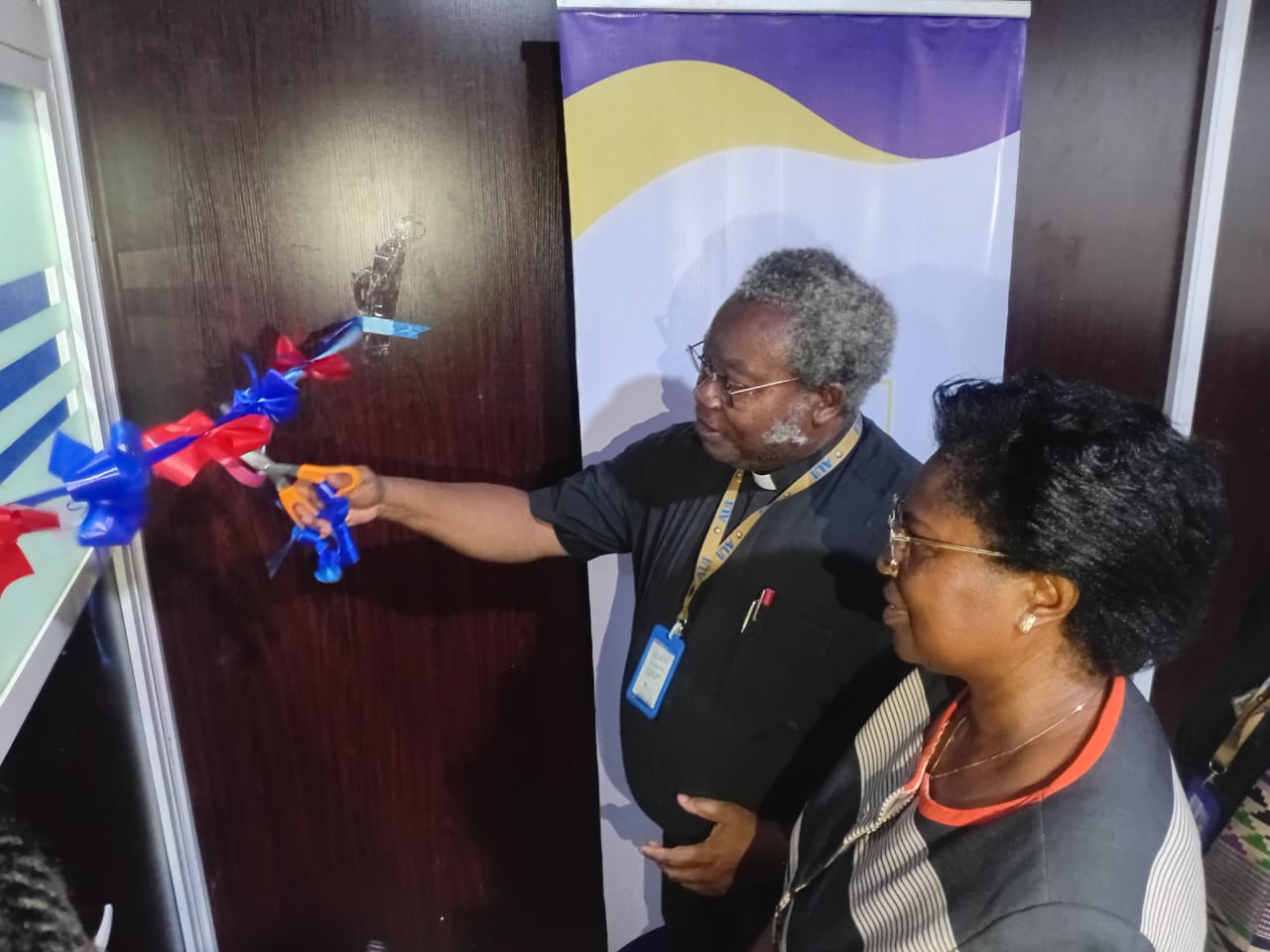
Speaking during the commissioning of the University online radio at the department of mass communications and media studies of the school in company of the school registrar, Mrs Margaret Aziba and the faculty dean Prof.Mrs Grace Ofure a seasoned economist, the Vice Chancellor emphasized the urgent need for institutions to move beyond reliance on external power sources and begin to chart a path toward independent energy solutions.
“What we are considering is not even an alternative source of power anymore,” he said. “We must begin to think of having our own power — becoming fully self-sufficient in energy on our campuses.”
He revealed that discussions had already commenced with the Chairman of the Infrastructure Committee, noting that proposals are currently under review and would soon be presented to the governing council for approval.
“If given the green light, this will define a new direction for us,” he added, describing the vision as “life after dependence.”
The former vice Chancellor of Dominican University Ibadan said drawing from Nigeria’s historical trajectory, he said the early post-independence years, noting that over-reliance on government initiatives slowed innovation and growth.
“We made a mistake believing government alone would provide everything — from education to communication infrastructure,” he stated.
He recounted the era of the defunct Post and Telecommunications (P&T), when access to telephone lines and broadcast services was highly limited and often unreliable.
“In those days, getting a telephone line could take years. Today, with mobile technology, everything is instant. We have evolved significantly,” he said.
He also referenced the transformation from agencies like P&T and NITEL to modern telecommunications systems, noting how technological advancement has democratized access to information.
“Today, what once required massive infrastructure is now available on a simple mobile phone,” he said.
He highlighted the rapid advancement in communication technology, recalling how global events such as World Cup matches or international broadcasts were once inaccessible in real-time.
“Now, you can watch anything live on your phone. That is the power of communication today,” he noted.
However, he warned against reducing communication to mere information dissemination.
“Communication is more than data transfer. It is an act of connection — an act of love,” he said, drawing inspiration from the philosophy of education which emphasizes meaningful human interaction.
He cautioned that when communication loses its ethical grounding, it risks becoming propaganda or misinformation.
“This is why the ethics of communication must be taken seriously, especially by those running media platforms,” he stressed.
Media Freedom and Growth
Reflecting on the evolution of broadcasting in Nigeria, he recalled a time when private or religious organizations were denied licenses to operate radio stations.
“There was a time when even the Church could not own a radio station. Today, individuals can run broadcast platforms from their mobile phones,” he said.
He commended the progress made by the staff and students of the department in media accessibility while urging the students to use the platform responsibly.
Addressing the staff of the department particularly students, he encouraged them to channel their energy into productive ventures and avoid distractions.
“I see great potential in our youth. Stay focused, stay out of trouble, and contribute to building this country,” he advised.
Despite acknowledging the challenges facing Nigeria, he remained optimistic about the nation’s future.
“Yes, it is tough. But if we dwell only on the difficulties, nothing will change. We must act,” he said.
He also reflected on his personal decision to return to Nigeria decades ago despite opportunities abroad, reaffirming his belief in the country’s potential.
Prof. Anthony Alaba Akinwale ended with a thought-provoking metaphor about responsibility and choice.
“Like a bird in your hands, the future is yours to shape. Whether it thrives or fails depends on what you do with it,” he concluded.
He said the message was clear: Nigeria’s progress depends not only on systems and structures but on the will, ethics, and commitment of its people to build a self-sustaining and responsible society.
While addressing the mass communications students school registrar Mrs Margaret Aziba enjoined the students to see this great initiative as a great opportunity other University students do not have access to urging them to make good use of it.
Prof Grace Ofure the dean appreciated the effort of the vice Chancellor in believing in the students as future leaders of tomorrow and encouraged the students not to let vice Chancellor and their parents down.
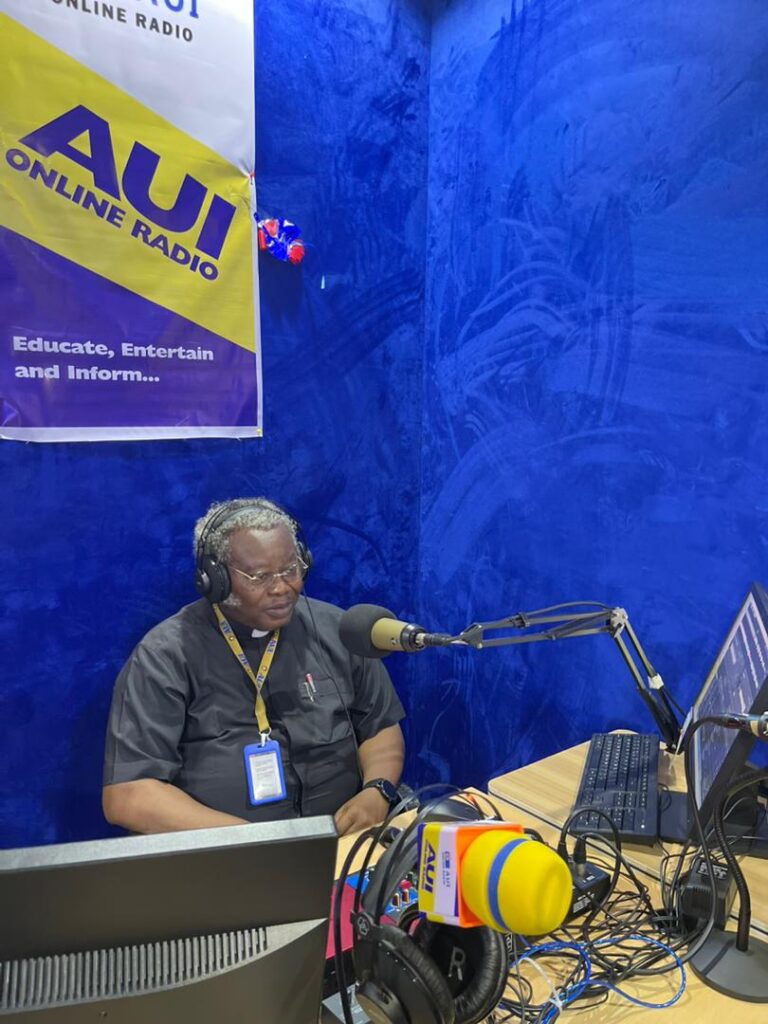
While welcoming the management to the studio on behalf of the department coordinator Dr Israel fadipe, Dr Emokhare Paul Anthony an international broadcast journalist and a lecturer at the department while taking them round the facilities said this is the first University online radio in the south West of Nigeria and stand to train the students in all spheres of broadcasting,journalism and programmes productions.
The Coordinator Dr Israel fadipe thanked the management for releasing for to be able to achieve this great fete,urging that with the global recognition of the radio now members of the public are enjoined to download the AUI Online Radio app on the phone playstore and listen to entertaining, informative and.educative programmes on the station.
In attendance at the opening ceremony are Drs, John ibanga,Nworisa,Miss Linda Kuku,Mr Ezekiel Oyatope.and the mass communications students of the University.
Emokhare Paul Anthony PhD Senior Reporter, Daily Herald, Saskatchewan, Canada and a lecturer,Augustine University Ilara-Epe
