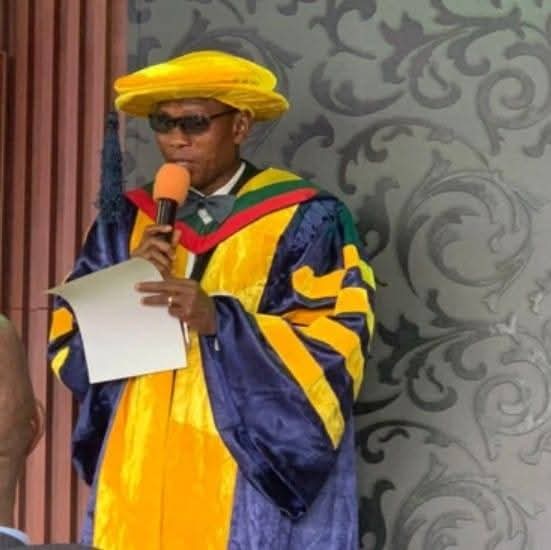
The General Manager of Pensioners’ FM 106.7, Ibadan, Oyo State, Dr. Babatunde Tiamiyu, has raised alarm over what he described as the alarming decline in professionalism in Yoruba news broadcasting across the South-West.
His concern followed a text sent to him from a station in the region, where a translator translated “In his address” as “nigba to njuwe adugbo re…” and “In another development” as “ninu idagbasoke miran…”.
He described the translations as inaccurate and embarrassing.
Dr. Tiamiyu questioned the direction Yoruba broadcasting is heading, asking:
“What are we turning Yoruba news broadcasting to?”
According to him, such literal translations distort meaning, damage the cultural integrity of the language, and weaken the broadcast profession.
He described the trend as a worrying shift away from established standards built by generations of seasoned broadcasters.
His post generated a wave of reactions from journalists, broadcasters, and listeners, many of whom shared similar experience.
A contributor recalled a troubling experience:
“I remember when an intern once translated S.O.N as ‘Omo tí Okunrin’ because the full meaning wasn’t spelt out.”
Several commenters linked the decline to poor recruitment processes. One widely supported comment read:
“When you pay peanuts, you employ monkeys.”
Another commenter emphasized:
“It will be so, because people with passion and knowledge of translation and transcription are no longer employed in media again. People are now employed with connections and slots. God won’t come down to help us.”
Others expressed concern that even basic pronunciation of Yoruba names now appears challenging for some newscasters. One contributor wrote entirely in Yoruba to highlight the depth of the issue, lamenting that many young broadcasters lack the required cultural and linguistic grounding.
Some reactions pointed to institutional failures and collapsing standards. One commenter remarked:
“Everything is lacking in merit. How did they get recruited into journalism, especially broadcast casting?
Another noted:
“The fault is from the management of such radio stations. You don’t just put anyone on air for news presentation.”
One respondent wrote:
“I can surely say that none of them is Radio Nigeria trained.”
Others stressed the need for mentorship and capacity building:
“Agba kii wa loja kori omo tuntun o wo,” urging experienced broadcasters to guide the younger generation.
The comments collectively reflect a deep fear that Yoruba news broadcasting, once known for linguistic richness, clarity, and professionalism, is losing its identity to poor translation skills, weak editorial supervision, and unprofessional recruitment practices.
Dr. Tiamiyu reiterated that Yoruba news is not a literal conversion of English scripts but a culturally rooted craft requiring training, mastery, and editorial discipline.
He encouraged media houses to prioritise continuous training, strengthen internal gatekeeping, and uphold the standards that made Yoruba broadcasting respected across Nigeria.
